Soil sliding, erosion, or a leaning wall is a problem that gets worse each season. We build concrete retaining walls in Woonsocket that stop the movement and stay straight through Rhode Island winters.
Concrete retaining walls in Woonsocket hold back soil on sloped or uneven land, preventing erosion, foundation damage, and the slow collapse of a hillside yard. Most residential projects - 20 to 40 feet long and three to four feet tall - take two to five days from excavation to cleanup.
Woonsocket sits in the Blackstone River valley, and much of the city's residential land is genuinely steep. For many homeowners here, a retaining wall is not a cosmetic upgrade - it is the thing standing between a usable yard and a slow erosion problem that gets more expensive to fix each year. If you have also been thinking about concrete floor installation for a basement project, a wall consultation is a good time to look at both.
Concrete - whether poured or segmental block - is one of the most durable wall materials available, resisting the rot and freeze-thaw damage that shortens the life of wood or some stone alternatives. When a wall is built with a frost-depth footing and proper drainage behind it, it is a decades-long fix.
If rain or snowmelt collects against your home rather than draining away, your yard is sloping toward you. Over time this leads to basement moisture and foundation damage. It is a common problem in Woonsocket neighborhoods where original grading was never corrected.
Channels carved into a hillside or soil collecting at the base of a slope are signs erosion is actively happening. Left alone, each spring rain removes more material. Woonsocket's concentrated snowmelt accelerates this significantly on any unprotected slope.
A wall that tilts away from the slope it holds, or shows horizontal cracks near the middle, is under more pressure than it can handle. This is a safety concern, not just cosmetic. Walls do not stabilize on their own once they start to move.
When soil alongside a driveway begins to erode and the edge starts to sink or break away, a small retaining wall along that edge can stabilize it before the problem spreads. This is common on Woonsocket properties where driveways run alongside a slope or embankment.
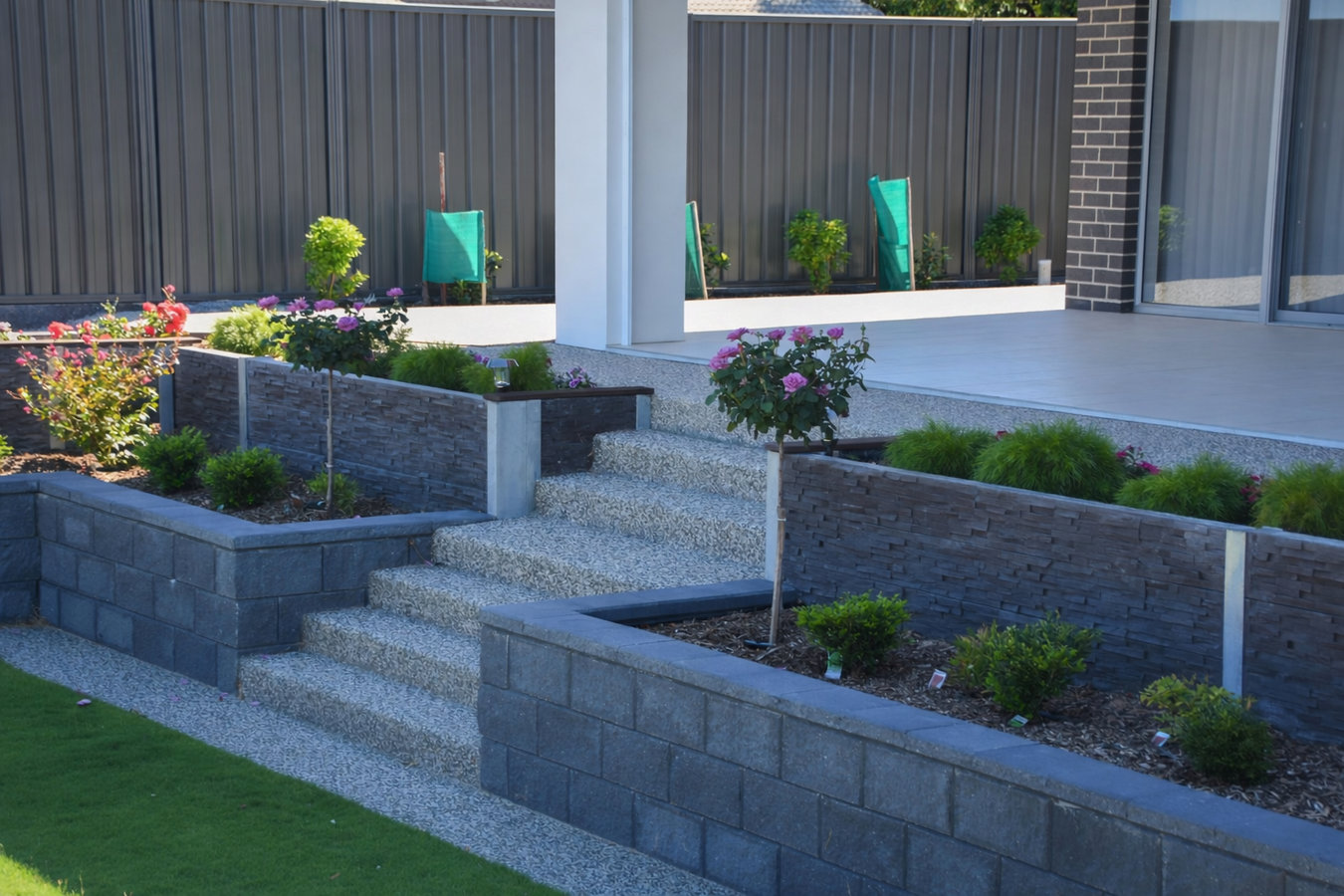
We build poured concrete walls and segmental concrete block walls for residential and commercial properties throughout the Woonsocket area. Poured walls are stronger for taller applications - they are cast in one solid piece and are the right choice when a wall needs to hold significant soil weight. Segmental block walls are assembled from interlocking units and are well suited for moderate heights and tiered designs. Both options are legitimate; the right one depends on your wall height, the soil behind it, and your budget.
Every project we take also includes drainage as a standard part of the build - not an add-on. Gravel backfill and a drainage pipe behind the wall are what protect it from water pressure over time. If you have been looking at concrete steps construction to complement a new wall, we can scope both at the same time.
Ideal for taller applications where maximum strength is needed. Formed and cast as one solid unit.
Interlocking segmental block assembled without mortar. A good fit for moderate heights and tiered designs.
Multiple shorter walls stepping up a steep slope. Safer and often more cost-effective than one tall wall.
Every wall we build includes gravel backfill and drainage pipe. This is the detail most contractors skip.
Woonsocket's location in the Blackstone River valley means many properties here have slopes that are steeper and more complicated than those in flatter parts of Rhode Island. Walls in this city frequently need to be taller or tiered, and the older housing stock - much of it built before modern grading standards - means yards often slope toward homes rather than away from them. Homeowners in North Smithfield face similar terrain and drainage challenges along the ridgelines bordering the valley.
Rhode Island averages roughly 47 inches of precipitation per year, and Woonsocket's spring snowmelt and concentrated April rains put real pressure on any slope without proper containment. The frost line here sits at approximately 48 inches, which means any retaining wall footing must go deeper than in warmer states - adding excavation time but making the difference between a wall that holds for 50 years and one that leans within five. Homeowners in Lincoln deal with similar frost conditions and often call us for walls on sloped lakeside and wooded lots.
Reach out by phone or form. We reply within 1 business day and schedule a free on-site visit to walk the slope with you.
We assess the slope, drainage patterns, and soil conditions. You receive a written estimate and a clear answer on whether a permit is required.
The crew digs to below Rhode Island's frost line - approximately 48 inches - before setting the footing. This is the step that determines how long the wall lasts.
The wall goes up alongside gravel backfill and a drainage pipe. After cleanup and inspection sign-off, the space is ready for landscaping.
Free on-site estimate. No obligation. We respond within 1 business day.
(401) 356-6412Rhode Island's frost line sits at roughly 48 inches. Every footing we place reaches below that depth so the ground freezing each winter does not push your wall out of position. This is the single most common reason walls in New England fail early.
We install gravel backfill and a drainage pipe behind every wall we build. Woonsocket's 47 inches of annual precipitation, combined with heavy spring snowmelt, creates real water pressure behind any wall that lacks this layer.
The Woonsocket Building Department requires permits for walls over four feet from footing bottom to top. We handle the application, the inspection scheduling, and all paperwork. You do not need to call city hall.
Woonsocket Building Department→We are based in Woonsocket and work throughout the Blackstone River valley. We understand this terrain - the steep terraced lots, the older properties without proper grading, and the soil conditions near the river - because we work here every season.
These are not separate promises - they work together. A wall built to the right depth, with drainage, and permitted correctly is the wall that is still straight and solid 20 years from now. That is the only kind we build.
For general guidance on retaining wall construction, the Portland Cement Association publishes technical resources on concrete construction standards.
Replace a cracked or damp basement slab, or pour a new floor for an addition or conversion project.
Learn MoreNew concrete steps built to complement your retaining wall or replace crumbling existing steps.
Learn MoreSlopes do not fix themselves - call Woonsocket Concrete now and get a written estimate before the next heavy rain hits.